New Asia and Latin America Connectivity: Asia Leads Stablecoin Adoption
The Asian Stablecoin Race
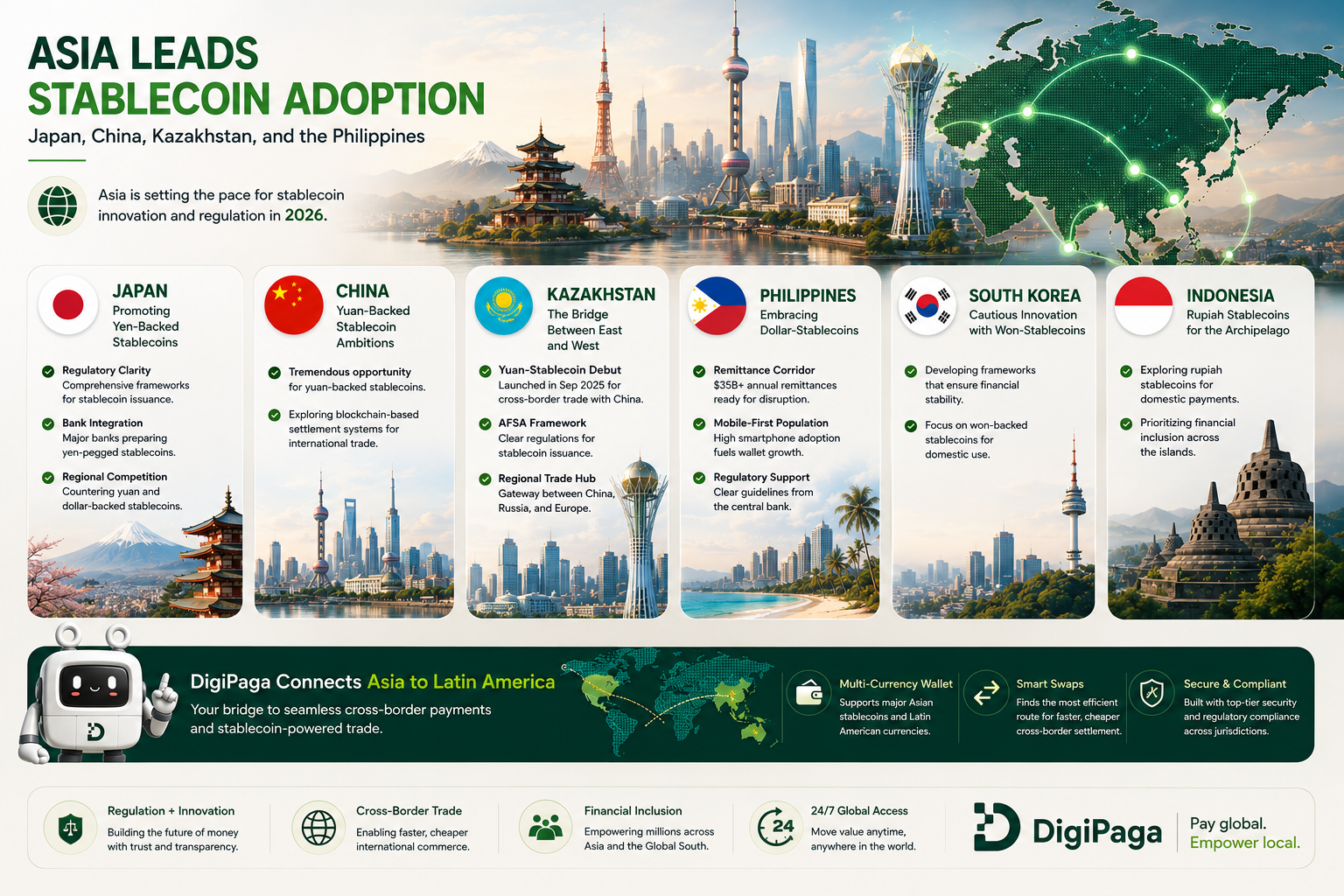
While Western regulators debate cryptocurrency frameworks, Asian nations are moving decisively to establish stablecoin infrastructure. In 2026, Japan, China, Kazakhstan, South Korea, Indonesia, and the Philippines are emerging as global leaders in stablecoin regulation and adoption, each with unique approaches tailored to their economic needs.
Japan: Promoting Yen-Backed Stablecoins
In June 2026, Japan's ruling party panel issued a critical recommendation: Japan must actively promote yen-backed stablecoins to maintain competitiveness in Asia. The Japanese government recognizes that without domestic stablecoin infrastructure, the yen risks losing relevance in the region's digital economy.
Key developments include:
- Regulatory Clarity: Japan has established comprehensive frameworks for stablecoin issuance and custody.
- Bank Integration: Major Japanese banks are preparing to issue yen-pegged stablecoins for domestic and cross-border use.
- Regional Competition: Japan aims to counter the rise of yuan-backed and dollar-backed stablecoins in Asian trade.
China: Yuan-Backed Stablecoin Ambitions
Circle's CEO recently highlighted tremendous opportunity for yuan-backed stablecoins, signaling a potential shift in China's approach to digital currency. While China has banned most cryptocurrency trading, the government is exploring blockchain-based settlement systems for international trade.
Kazakhstan: The Bridge Between East and West
Kazakhstan is positioning itself as a regulatory hub for stablecoin innovation in Central Asia. The Astana Financial Services Authority (AFSA) has introduced a comprehensive stablecoin framework that balances innovation with consumer protection.
Notable initiatives:
- Yuan-Stablecoin Debut: In September 2025, Kazakhstan launched a yuan-backed stablecoin for cross-border trade with China, signaling blockchain ambitions for the Belt and Road Initiative.
- AFSA Framework: Clear regulations for stablecoin issuance, custody, and redemption attract international fintech companies.
- Regional Trade Hub: Kazakhstan aims to become the stablecoin gateway between China, Russia, and Europe.
The Philippines: Embracing Dollar-Stablecoins
The Philippines has emerged as one of the most crypto-friendly nations in Asia, with regulators actively supporting stablecoin adoption for remittances and financial inclusion.
Key factors:
- Remittance Corridor: Over $35 billion in annual remittances makes the Philippines ideal for stablecoin disruption.
- Mobile-First Population: High smartphone penetration enables rapid stablecoin wallet adoption.
- Regulatory Support: The Bangko Sentral ng Pilipinas has created clear guidelines for stablecoin operators.
South Korea and Indonesia: Cautious Optimism
Both nations are developing stablecoin frameworks that prioritize financial stability while enabling innovation. South Korea is focusing on won-backed stablecoins for domestic use, while Indonesia is exploring rupiah stablecoins for archipelago-wide payments.
How DigiPaga Connects Asia to Latin America
DigiPaga is building the payment engine for the Global South, creating bridges between Asian and Latin American markets.
As Asian nations advance their stablecoin infrastructure, DigiPaga ensures Latin American businesses can participate in this digital economy. Our Multi-Currency Wallet supports major Asian stablecoins alongside Latin American currencies. Whether you're a Mexican importer paying suppliers in Japan, or a Brazilian exporter receiving payments from the Philippines, DigiPaga's Smart Swaps technology finds the most efficient route for cross-border settlement. We're making Asian-Latin American trade faster, cheaper, and more accessible through stablecoin innovation.
Ready to simplify your payments?
Join thousands of businesses across Latin America using DigiPaga to scale their operations.